Disabilities Law Applied to Athletic Programs
- Irma Chavez
- Nov 21, 2016
- 5 min read

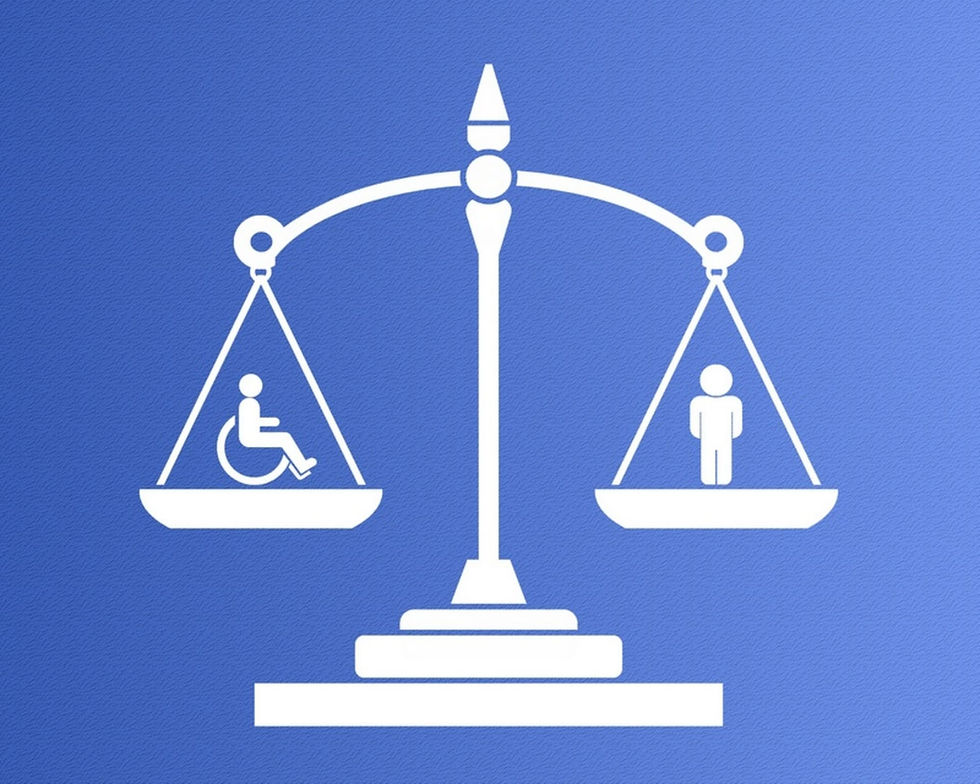
A disability is defined as a person who has a physical or mental impairment that limits one or more daily activities. Having a disability does not affect one race, gender, or culture. Disabilities affect people in many different ways, from someone being in a wheelchair to someone having severe anxiety attacks . Having a disability is caused by an accident, trauma, genetics, or disease, that hinders a person’s ability to mentally process, sense, and/or mobility (What). The Individuals with Disabilities Education Act and Section 504 of the Rehabilitation Act was passed to help ensure that children with disabilities were given the equal opportunities in education and have rights against discrimination (Individuals). Children/adults have the right to participate in selective or competitive programs, as long as they have the right skills, and should not be discriminated against based on their disability.
Civil Rights
The Individuals with Disabilities Act (IDEA), which was passed in 1975, was passed to “protect the rights of children with disabilities” and allow them to have the appropriate, free resources in the classroom. Section 504 of the Rehabilitation Act allows students to be provided with additional services, designed to meet individual needs. A student, qualified with a disability, is allowed to participate in any program offered as long as they have the right skills and as long as the selection process is not discriminatory towards them. When the student has the skill but needs more assistance, for example an interpreter, the coach has to find a way to fund this and provide one for him/her. The school cannot deny a student with a disability from an aid and must never assume or stereotype their disability. The school and coaching staff must always put the needs to the student and must make sure rights that every student, with or without disabilities, has the same services (What You).
Literature
Every student should have the same opportunities and the same rights, with or without a disability. This was not the case for Schor, who was a high school freshman who suffered from severe anxiety attacks. When she enrolled into Whitesboro high school, she enrolled into the swim team and told everybody (the school and swim team staff) about her condition and what to do when she would have an attack. Her anxiety attacks would require her to experience fears of drowning and need to exit the pool to calm her down. This happened at several meets and the coach showed no compassion and only threatened her removal on the team. The coach was unwilling to make accommodations and because of this Schor was unable to stay in school for the remaining of the semester. The court ruled that because Schor failed to meet the requirements of the swim team, “she must swim when told to do so”, they ruled in favor of the school district. The swimming coach was very rude to Schor and multiple times accused her of having fake anxiety attack (Prep). I believe that the coach and the school didn’t provide the correct resources for Schor, and the coach would discriminate against her because he didn’t believe her. The coach did not treat every member of the swim team as equals and violated Section 504 of the Rehabilitations Act.
According to civil rights, everybody should have the same opportunities as long as they have the right skills to be on the team. Tatyana McFadden has spinal bifida and uses a wheelchair and all she wanted to do is compete on the track with her peers. School officials claimed that her racing chair was a safety hazards and that it was an unfair advantage against the others. The court ruled that she would be allowed to compete against others. Later the Maryland public secondary schools athletic association ruled that wheelchair athletes can compete but they could not earn points for their school team (Wrightslaw). I believe Tatyana had every right to compete and race against her peers, even if she is disabled. It’s unfair that her racing doesn’t count towards her school but Tatyana only wanted to participate and have the same opportunities as her peers.
Having a disability puts you at the forefront of discrimination, as was the case with a student at Dietrich High School in Idaho. John R.K. Howard, Tanner Ward and a third unnamed student were in the locker room with the disabled teammate when asked for a hug. This hug turned violent, and instead the teammates restrained the boy so that Tanner and Howard could rape him. The “ringleader” then thrusted a coat hanger into his rectum and kicked it in numerous times. This was not the only event that had plagued the boy. These teammates would make racist comments toward his ethnicity, taunt him with racist nicknames, and even once coerced him into learning a tune entitled “Moonman Notorious KKK”, a song about lynching. (Miller) The victim’s family filed a $10 million lawsuit against the Dietrich School District for failing to protect him from racism and sexual assault within the school. The lawsuit also names 11 employees as defendants because they did nothing to stop the racial and physical abuse. A notable amount of the football coaches also encouraged other players to pick fights the boy by allowing the larger students to knock the boy unconscious, while others catcalled, taunted, and shouted racial slurs. The school district did not protect the student, and violated the Section 504 of the Rehabilitation Act.
Implications
Disabilities in sports is often played off and sometimes people are not given the same rights and not taken seriously. Often times athletes with disabilities are overlooked and are often stereotyped. Many of them sometimes are not considered for teams because of their disabilities because they assume they don’t have the right skills. IDEA and Section 504 are making a change in sports and gives everybody a fair opportunity to be included and provide the resources to succeed (Lee). These laws are made to protect the civil rights of people with disabilities but a lot of the time, people are misinformed and believe that they have no rights. The culture of future coaches and school systems has to change and everybody should be treated the same. Of course, adjustments might have to be made but treating everybody like they would like to be treated is a right. A way to improve this would be to hold a lot of more trainings towards both players and coaches. I believe that the more information you have is always key to have a very successful program.
Conclusion
People are excluded every day from being part of sports because of their disability. They are often mistreated, bullied, and stereotyped because they are different. A person’s disability does not hinder performance and should not be treated less than. IDEA and Section 504 were created to protect the rights and make sure that people with disabilities are given fair judgment and the right amount of resources (Lee). Coaches should judge less and teach other members of their teams to include and accept people with disabilities. A lot of the time, members in these teams are not accepting and can cause harm towards others and also bully them. Coaches and schools should create a safe environment where everybody is included and everyone feel like they are included in the team.
References
Individuals with disabilities education act (IDEA). https://www.disability.gov/individuals-disabilities-education-act-idea/.
Lee AMI. How IDEA Protects You and Your Child. Understood.org. https://www.understood.org/en/school-learning/your-childs-rights/basics-about-childs-rights/how-idea-protects-you-and-your-child.
Miller M. Dietrich high athletes raped black, mentally disabled teammate, lawsuit claims. http://www.idahostatesman.com/news/state/idaho/article79765702.html.
Prep swimmer loses ADA Lawsuit. http://www.athleticbusiness.com/ada-accessibility/prep-swimmer-loses-ada-lawsuit.html.
What is a Disability. What is a Disability. http://www.dwa.org.au/whatisadisability.htm.
What you need to know about students with special needs and participation in Interscholastic athletics - friendship circle - special needs Blog. Legal & Planning. http://www.friendshipcircle.org/blog/2013/07/03/what-you-need-to-know-about-students-with-special-needs-and-participation-in-interscholastic-athletics/.
Wrightslaw. Athlete sues for right to compete; State passes athletics equity law. http://www.wrightslaw.com/blog/athlete-sues-for-right-to-compete-state-passes-athletics-equity-law/.
Comments